


Brushless vs Brushed Motors: The Ultimate Hobbyist Guide
by Motion RC July 23 2026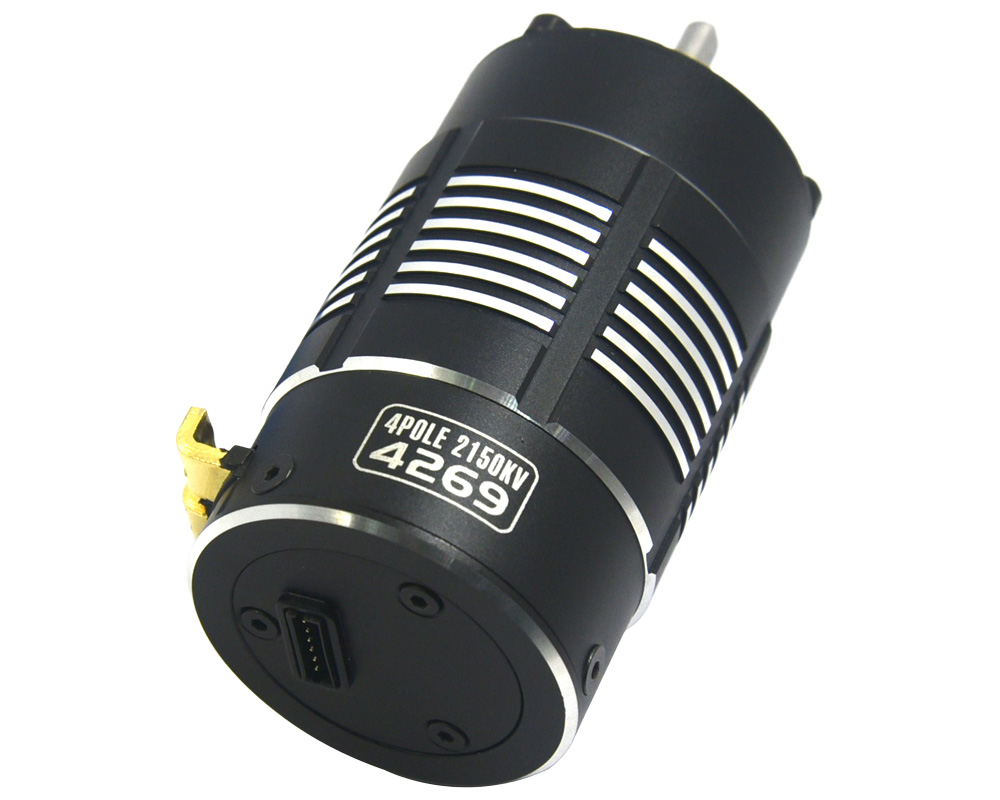
Choosing between a brushed and brushless motor is one of the biggest decisions you will make for your model. Choosing the right motor is one of the most important decisions for any RC build. It affects power-to-weight ratio, runtime, battery selection, and maintenance across rock crawlers, aerobatic airplanes, bashers, and collective-pitch helicopters.
While both motor types convert battery power into mechanical rotation, they do it using completely different technologies. This guide breaks down how brushed and brushless motors work, details the critical differences across air and surface applications, and helps you choose the right power plant for your rig.
The Quick Answer: Brushed vs. Brushless
- Choose Brushed if: You are building ultra-light micro indoor planes, low-speed scale rock crawlers, or entry-level, budget-focused surface models where cost and simplicity are the top priorities.
- Choose Brushless if: You want maximum thrust-to-weight ratio for vertical flight, high RPMs for EDF jets and helicopters, extreme top speeds for bashers, or optimized runtime on modern park flyers.
How Does a Brushed Motor Work?
Brushed motors use a classic, mechanical design. Inside the motor can, fixed permanent magnets surround a spinning core of wire coils (the armature).
To keep the motor spinning, the direction of the electrical current must constantly flip. In a brushed setup, this is done mechanically:
- Two carbon blocks (brushes) physically press against a rotating contact ring (the commutator).
- As the motor spins, the brushes slide across the segments of the commutator, automatically reversing the current flow.
Pros & Cons
- The Good: Incredibly cheap upfront, simple wiring, and offers smooth power delivery at ultra-low speeds without complex electronics.
- The Bad: Physical friction creates intense heat, robs battery efficiency, and limits maximum RPM. Over time, the brushes wear out, requiring manual replacement or a new motor.
How Does a Brushless Motor Work?
Brushless motors flip the design inside out. The permanent magnets sit on the spinning section (the rotor), while the copper wire coils stay fixed to the stationary part (the stator).
Because there are no physical brushes, current switching must be handled electronically by your Electronic Speed Controller (ESC).
The Truth About ESCs: Sensored vs. Sensorless
A common misconception is that standard ESCs "know" the rotor position through the main motor wires. In reality, brushless systems are split into two categories based on how they track rotation:
- Sensorless Brushless Systems: The ESC sends power blindly and reads the "back EMF" (voltage feedback) from the 3 motor wires only once the motor is already spinning. At a dead stop, the ESC doesn't know where the rotor is, which can cause cogging—a stuttering, jerky motion on initial startup.
- Where it's used: Airplanes, Helicopters, and Boats. Because props and rotors face almost zero resistance at a dead stop, they spin up instantly. This makes lightweight, simple sensorless systems the absolute standard in flight.
- Sensored Brushless Systems: These motors feature an internal position sensor (hall effect sensors) and a separate 6-pin harness that plugs into a sensored ESC. This sensor tells the ESC the exact position of the rotor down to the millimeter.
- Where it's used: Cars and Rock Crawlers. This completely eliminates cogging, providing the buttery-smooth, low-speed throttle control required to climb obstacles or accelerate predictably out of a tight corner.
Pros & Cons
- The Good: Massive power-to-weight ratio, incredible battery efficiency (longer flight and run times), extreme RPM capability, and zero brushes to wear out.
- The Bad: Higher initial cost, requires a more advanced ESC, and added weight/complexity if a sensored motor is used.
Key Differences for Hobbyists
1. Wiring Layout
- Brushed: Uses 2 wires (Positive and Negative) running from the ESC to the motor. Flipping the two wires simply reverses the motor direction (e.g., changing prop rotation).
- Brushless: Uses 3 main wires (usually labeled A, B, and C) to phase the electronic timing. Swapping any two of these three wires will reverse the motor direction. Sensored surface versions will also feature the small, flat sensor wire harness.
2. Inrunner vs. Outrunner (The Aircraft Factor)
While cars almost exclusively use "Inrunner" brushless motors (where the core spins inside a fixed outer can), flight introduces a critical variation:
- Inrunner Motors: Spin their internal shaft at very high RPMs. Perfect for EDF jets, cars, and high-speed boats.
- Outrunner Motors: The outer can of the motor actually spins around the internal coils. This creates massive torque at lower RPMs, allowing airplanes and park flyers to swing large, high-thrust propellers directly without needing a heavy, noisy gearbox.
3. Motor Tuning: Turns (T) vs. Kv Rating
When shopping for a motor, you will see two different rating systems:
- Turns (T): Primarily used for Brushed motors (and sensored racing car motors). It counts how many times wire is wrapped around the core. Higher turns (e.g., 55T) = high torque / low speed. Lower turns (e.g., 12T) = low torque / high speed.
- Kv Rating: Used universally for Brushless motors. It stands for RPM per volt with no load. A 2200Kv motor running on a 3S LiPo battery (11.1V) will try to spin at roughly 24,420 RPM (2200 x 11.1). Aircraft builders use Kv to precisely match their motor to their battery voltage and propeller size.
Summary Comparison
|
Feature |
Brushed Motor |
Brushless Motor |
|
Price |
Low / Budget-friendly |
Moderate to High |
|
Power-to-Weight Ratio |
Poor (Heavy for the power output) |
Excellent (High thrust, lightweight) |
|
Battery Efficiency |
Low (More heat, shorter flights/runs) |
High (Less heat, maximized flight time) |
|
Maintenance |
High (Requires cleaning/brush changes) |
Virtually zero (Only occasional bearing maintenance) |
|
Common Application |
Micro aircraft, scale crawlers, toy-grade |
Park flyers, stunt planes, helis, fast cars |

Byron B.
Byron is the Category Manager for Electronics and Accessories at Motion RC. He focuses on sourcing the reliable components, power systems, tech, and essential gear that keep your favorite models running smoothly and performing at their best.
Share this article


Latest Blog Post

Trending Items


Freewing Mirage 2000C V2 High Performance 80mm EDF Jet - PNP

SKU: FJ20635P


Freewing Ares 3D Red Ultra Performance 8S 90mm EDF Jet - PNP
SKU: FJ32312PG


Freewing SR-71 Blackbird Twin 70mm EDF Jet With Gyro - PNP
SKU: FJ32211PG


Freewing PLAAF J-10A Ultra Performance 8S 90mm EDF Jet - PNP

SKU: FJ32121P
New Arrivals


Freewing Eurofighter Typhoon V2 90mm EDF Jet - ARF PLUS

SKU: FJ31913AP


Freewing Eurofighter Typhoon V2 8S High Performance 90mm EDF Jet with Gyro - PNP
SKU: FJ31923PG


Freewing Eurofighter Typhoon V2 6S 90mm EDF Jet with Gyro - PNP
SKU: FJ31913PG


Bancroft 1/200 Scale COSCO Shipping 1513mm (59.6") Container Ship - RTR
SKU: BNC1074-001


Carisma M40S 2.0 Honda Civic Type R FL5 1/10 Scale Brushless 4WD Car - RTR
SKU: CIS90068


Freewing F-35C Lightning II 12S 110mm EDF Jet with Gyro - PNP
SKU: FJ50111PG

