


Top 10 Fastest RC Planes for Speed Enthusiasts
by Motion RC June 8 2026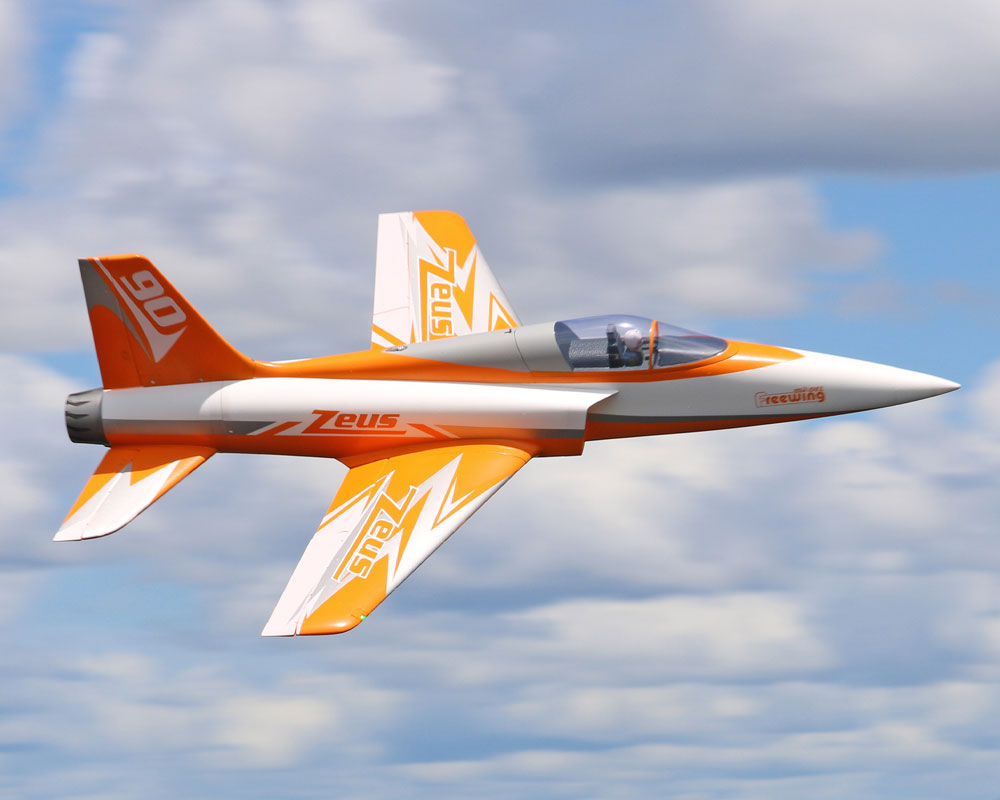
There is something uniquely thrilling and majestic about watching an RC plane zoom and disappear into the sky at more than 150 mph. One second it's sitting on the runway and the next it becomes a streak in the sky filled with pure adrenaline. The sound of the jet alone feels like someone ripped open the sky with a jet-shaped zipper!
For RC pilots, speed is simply addictive. Nothing can beat the experience of handling a high-performance jet slicing through the air at full throttle. After such an adventure, flying any standard trainer plane suddenly feels like flying paper airplanes that are struggling against the wind.
But not all fast RC planes are the same.
Some RC planes are exclusively built for razor-sharp straight-line speed. Others balance speed with agility and aerobatic precision. And then there are the elite turbine-powered pieces of art that are capable of doing things that feel impossible. But which ones are the best RC planes that actually suit your flying style, skill level and need for speed?
In this guide, we’ll break down what actually makes an RC plane fast, compare EDF jets with propeller-driven aircraft, and explore ten of the fastest RC planes currently dominating the hobby scene. From upgrading from your first EDF to hunting for your next speed demon, this list covers the models speed enthusiasts obsess over.
What Makes an RC Plane Fast?
A fast RC plane is not just about installing a bigger motor and pushing the throttle to 100%. Real speed comes from the way multiple components work together, including the power system, aerodynamics, battery voltage, wing design, and even how cleanly the aircraft is assembled. That is why two RC planes with similar motors can perform completely differently in the air.
EDF Jets, Turbine Jets, and Propeller-Driven Planes
High-speed RC aircraft generally fall into three broad categories: EDF jets, turbine jets, and propeller-driven aircraft. Each can be fast, but they create speed in very different ways.
EDF jets, or Electric Ducted Fan jets, use an electric motor to spin a multi-bladed fan inside a ducted housing. This gives the aircraft a jet-like appearance and sound without the cost, complexity, or field requirements of a gas turbine engine. EDF jets are popular for high-speed passes, scale jet realism, and relatively straightforward electric operation. Models like the Freewing F-16, F-22, and other performance EDFs are designed to deliver strong speed, smooth flight, and realistic jet handling.
Turbine jets use miniature gas turbine engines that operate much more like full-scale jet engines. They offer the most authentic jet experience, with real turbine sound, exhaust, and high-speed performance. However, turbine aircraft are significantly more expensive, require advanced setup and maintenance, and are generally best suited for highly experienced pilots flying at approved turbine-capable airfields.
Propeller-driven aircraft use an exposed propeller powered by an electric motor or internal-combustion engine. While they may not always offer the same jet-style realism, many prop aircraft accelerate quickly, fly efficiently, and can be extremely fast in the right configuration. Pylon racers, sport aircraft, and high-performance aerobatic models can deliver impressive speed while often offering longer flight times and strong maneuverability.
Motor Kv Rating Explained Simply
Motor Kv is one of the most misunderstood RC terms for beginners. Kv describes how many revolutions per minute a motor will try to spin for every volt supplied, with no load attached. For example, a 2000Kv motor on a 22.2V 6S battery has a theoretical unloaded speed of about 44,400 RPM.
In the real world, the motor is never operating without a load. The propeller or EDF fan determines how hard the motor has to work to reach its operating RPM. A larger propeller, higher-pitch propeller, or more aggressive fan setup increases the load on the motor. That can produce more thrust or speed when properly matched, but it also increases current draw, heat, and stress on the ESC and battery.
The goal is not simply to choose the highest Kv motor. The goal is to match motor Kv, battery voltage, propeller or fan load, ESC rating, and battery capability so the power system delivers the desired performance without overheating or exceeding safe current limits.
Battery Cell Count: 4S vs 6S vs 8S
Battery cell count is one of the major factors that affects RC airplane performance because it determines the voltage supplied to the power system. A higher cell count provides more voltage, which can allow the motor to spin faster, produce more power, and deliver stronger acceleration when the motor, ESC, propeller or EDF fan, and battery are properly matched.
A 4S setup is common in many smaller sport aircraft, trainers, and entry-level EDF jets. It can provide strong performance while keeping battery size, cost, and power demands manageable.
A 6S setup is widely used in larger and higher-performance electric aircraft, including many modern 70mm and 80mm EDF jets. With the right motor and fan or prop combination, 6S power offers a strong balance of speed, thrust, battery availability, and reliability.
An 8S setup provides even higher voltage and is often used in more powerful EDF jets and larger performance aircraft. These systems can deliver excellent acceleration, vertical performance, and top speed, but they also place greater demands on the motor, ESC, batteries, connectors, and cooling. For that reason, higher-cell-count setups are generally best suited for pilots with more experience operating and maintaining high-performance electric power systems.
Larger electric aircraft and high-performance EDF jets may use even higher cell counts, such as 10S, 12S, or more. In these cases, higher voltage is often used to produce more power efficiently without forcing excessive current through the system. However, more cells also mean more demanding setup requirements, including properly matched motors, ESCs, batteries, connectors, chargers, and cooling. The key is not simply choosing more cells. The entire power system has to be designed to work together safely and efficiently.
Wing Design and Aerodynamics
Aerodynamics plays a major role in RC speed, but model aircraft do not always behave like full-scale aircraft. Because RC planes are much smaller, the airflow over the wing, fuselage, and control surfaces does not scale exactly the same way it does on a full-size aircraft. As a result, airfoil choice, wing loading, surface finish, drag, and overall airframe cleanliness can have a significant effect on performance.
Airfoil choice matters, but the best airfoil for an RC model is not automatically the thinnest or most aggressive-looking shape. At model scale, an airfoil has to work well within the aircraft’s actual speed range and size. For fast RC aircraft, the goal is to balance low drag with enough lift, stability, control authority, and predictable handling for both high-speed passes and landing. In addition, a clean fuselage, properly aligned wings and control surfaces, smooth linkages, and well-fitted hatches can all help the model fly more efficiently.
Small details matter more as speed increases. Large hinge gaps, exposed wiring, uneven control surfaces, poorly fitted hatches, or misaligned parts can disturb airflow and add drag. Some EDF pilots seal hinge gaps with clear tape to reduce airflow leakage and improve control response, especially on faster models.
Wing shape also affects how a model handles at speed and during landing. Thin wings, delta wings, and scale swept-wing layouts each involve tradeoffs in stability, drag, stall behavior, landing speed, and maneuverability. On many RC jets, the wing planform is driven as much by scale appearance as by performance, so it is better to judge the complete aircraft design rather than assume one wing shape is automatically faster than another.
Weight-to-Thrust Ratio
The relationship between aircraft weight and available thrust determines how quickly a plane accelerates and climbs.
A lightweight aircraft with a powerful EDF or propeller propulsion system will launch harder, climb faster, and maintain speed more efficiently than a heavier aircraft with the same power setup. However, balance is important. Excess weight increases wing loading, stall speed, landing speed, and the amount of energy the aircraft carries at high speed. At the same time, adding more thrust without the right airframe, setup, and control authority can make the aircraft harder to manage. The fastest RC planes are not just powerful; they are properly balanced, structurally sound, and designed to remain predictable at speed.How to Measure RC Plane Speed
Most RC enthusiasts use GPS data loggers or radar speed guns to measure top speed accurately. GPS loggers are installed inside the aircraft and record real-time ground speed flight data, while radar guns are used from the ground during high-speed passes.
Some advanced radio systems also include telemetry sensors that display live speed readings directly on the transmitter. For serious speed enthusiasts, tracking flight data becomes part of the fun, almost like tuning a miniature race car in the sky.
EDF vs. Turbine vs. Propeller Planes: Which is Faster?
Few debates in the RC world create more arguments at flying fields than EDF jets, turbine-powered aircraft and propeller-driven speed planes do. One pilot will swear that nothing beats the screaming speed of a high-power EDF jet, while another will point toward lightweight prop racers that accelerate like rockets. Then there are turbine enthusiasts casually standing nearby like people who brought an actual fighter jet to the conversation.
The truth is that all three aircraft types are fast, but they achieve speed in completely different ways.
EDF Jets: The Perfect Balance of Speed and Realism
EDF (Electric Ducted Fan) jets are specifically designed for smooth high-speed flight. Because the fan system is enclosed inside the fuselage, the aircraft creates less drag and maintains momentum efficiently during fast passes.
Modern 6S and 8S EDF jets like the Freewing F-22 or Avanti S can exceed 190+ kph while delivering realistic jet sound and appearance without the extreme cost of turbines.
Propeller Planes: Fast, Agile and Efficient
Propeller-driven aircraft focus more on acceleration and maneuverability. They respond instantly to throttle input, turn aggressively, and usually stay airborne longer because prop systems are more efficient than EDF setups.
While some speed-focused prop racers can achieve incredible velocity, they generally prioritize agility and responsiveness over pure jet-style top-end speed.
Turbine Jets: The Ultimate RC Speed Machines
Turbine jets use miniature real jet engines fueled by kerosene or jet fuel. These aircraft produce an authentic turbine sound, visible exhaust heat, and breathtaking speed that can exceed 300 kph.
However, turbine jets also demand expert-level piloting skills, complex maintenance, and significantly larger budgets compared to EDF or propeller-driven aircraft.
We’ve prepared a table to give you a proper overview of the different RC planes. You can use this information to find the ideal one that fits your style:
|
Aircraft Type |
Power System |
Typical Top Speed |
Flight Characteristics |
Main Advantages |
Main Drawbacks |
Best For |
|
EDF Jets |
Electric ducted fan powered by LiPo batteries |
Around 160 to 220+ kph depending on setup |
Smooth, stable, and fast during straight-line passes |
Realistic jet appearance and sound, high straight-line speed, cleaner aerodynamics, lower cost than turbines |
Shorter flight times, high battery consumption, expensive high-capacity LiPo packs, less efficient than prop planes |
Pilots who want the best balance of speed, realism, and affordability |
|
Propeller Planes |
External propeller driven by electric, glow, or gas motors |
Around 120 to 200+ kph depending on aircraft type |
Extremely responsive, agile, and quick to accelerate |
Better efficiency, longer flight times, easier maintenance, lower running costs, sharp aerobatic capability |
Less realistic jet feel, more drag at extreme speed, propeller noise can become excessive |
Pilots who enjoy aggressive maneuvering, racing, and longer flying sessions |
|
Turbine Jets |
Real miniature jet engine fueled by kerosene or jet fuel |
Often 250 to 300+ kph |
Extremely powerful, smooth, and highly realistic at speed |
Authentic jet-engine sound, visible exhaust heat, breathtaking realism, unmatched scale presence and performance |
Extremely expensive, advanced maintenance requirements, complex startup procedures, higher operating risk, expert-level flying required |
Experienced RC enthusiasts seeking the ultimate high-speed jet experience |
Top 10 Fastest RC Planes
Modern RC jets have reached a level of performance that would have sounded impossible a decade ago. With advanced EDF systems, powerful 6S and 8S LiPo batteries, and highly aerodynamic airframes, many of today’s RC aircraft can exceed 190+ kph while still delivering realistic jet handling and stunning scale detail.
Some of these aircraft are built purely for straight-line speed, while others combine raw performance with aerobatic precision and smoother handling. From aggressive 90mm EDF fighters to versatile sport jets, the following models are among the fastest and most exciting RC planes currently available for speed enthusiasts.
1. Freewing Zeus 90mm 8S EDF Sport Jet
- Top Speed: Up to 240 KPH (150 MPH)
- Power System: 90mm 12-blade EDF, 4075-1350Kv brushless inrunner motor, 120A ESC, 8S setup
- Battery: Two 4S 5000mAh LiPo batteries or 6S + 2S combination
- Skill Level Required: Intermediate
- Price: $659 / €629
BUY NOW: Freewing Zeus 90mm 8S EDF Sport Jet
The Zeus is currently one of the fastest EDF sport jets available on Motion RC. Its sleek aerodynamic body, 8S power system, and aggressive 90mm EDF setup allow it to hit breathtaking speeds while still remaining surprisingly stable in the air.
2. Freewing F-22 Raptor V2 Ultra Performance 8S 90mm EDF Jet
- Top Speed: 190+ KPH
- Power System: 90mm 12-blade EDF, 4075-1350Kv brushless inrunner motor, 120A ESC, 8S setup
- Battery: Two 4S 5000mAh LiPo batteries
- Skill Level Required: Intermediate to Advanced
- Price: $679 / €659
BUY NOW: Freewing F-22 Raptor V2 Ultra Performance 8S 90mm EDF Jet
The F-22 Raptor V2 is one of the most aggressive foam EDF jets in the RC hobby. With thrust vectoring, huge vertical power, and razor-sharp acceleration, it delivers a flying experience that feels like a miniature stealth fighter tearing across the sky.
3. Freewing Eurofighter Typhoon 8S High Performance 90mm EDF Jet
- Top Speed: High-performance 8S EDF setup capable of extreme speed passes
- Power System: 90mm 12-blade EDF, 4075-1350Kv brushless inrunner motor, 120A ESC, 8S setup
- Battery: 8S LiPo compatible
- Skill Level Required: Advanced/Expert
- Price: $719 / €739
BUY NOW: Freewing Eurofighter Typhoon 8S High Performance 90mm EDF Jet
The Eurofighter Typhoon combines extreme speed with one of the most visually intimidating airframes in RC aviation. Its canards, thrust, and highly refined aerodynamics make it exceptionally stable during fast, low-altitude passes.
4. Freewing F-16 V2 Ultra Performance 8S 90mm EDF Jet
- Top Speed: Approximately 190+ KPH
- Power System: 90mm EDF, 4075-1350Kv brushless motor, 120A ESC, 8S setup
- Battery: 8S LiPo compatible
- Skill Level Required: Advanced
- Price: $695 / €679
BUY NOW: Freewing F-16 V2 Ultra Performance 8S 90mm EDF Jet
The F-16 remains one of the best EDF speed platforms ever produced because of its slim fuselage and excellent aerodynamic efficiency. At full throttle, the aircraft slices through the air with incredible smoothness and stability.
5. Freewing Avanti S V2 80mm EDF Sport Jet
- Top Speed: Approximately 190+ KPH with upgraded setup
- Power System: 80mm EDF with brushless motor, 6S setup
- Battery: 6S 5000mAh LiPo
- Skill Level Required: Intermediate to Advanced
- Price: $429 / €399
BUY NOW: Freewing Avanti S V2 80mm EDF Sport Jet
The Avanti S is legendary among EDF enthusiasts because it balances speed, aerobatics, smooth landings, and predictable handling better than almost any sport jet in the hobby. It feels fast without constantly trying to punish the pilot.
6. Freewing F-14 Tomcat Twin 80mm EDF Jet
- Top Speed: Approximately 180+ KPH
- Power System: Twin 80mm EDF system, 6S compatible
- Battery: 6S LiPo setup
- Skill Level Required: Advanced
- Price: $659 / €629
BUY NOW: Freewing F-14 Tomcat Twin 80mm EDF Jet
Few RC aircraft look as dramatic in flight as the F-14 Tomcat. The variable sweep wings completely transform the aircraft’s appearance during high-speed passes, giving it a cinematic fighter-jet personality that RC enthusiasts adore.
7. Freewing Mirage 2000C V2 High Performance 80mm EDF Jet
- Top Speed: Approximately 170+ KPH
- Power System: 80mm EDF with 6S setup
- Battery: 6S LiPo battery
- Skill Level Required: Intermediate to Advanced
- Price: $x / €x
BUY NOW: Freewing Mirage 2000C V2 High Performance 80mm EDF Jet
The Mirage 2000 is famous for its smooth delta-wing aerodynamics and excellent momentum retention. During fast passes, the aircraft feels incredibly planted and stable while still maintaining sharp maneuverability.
8. Freewing MiG-29 Fulcrum Twin 80mm EDF Jet with Thrust Vectoring
- Top Speed: High-performance twin EDF setup for aggressive speed and aerobatics
- Power System: Twin 80mm EDF units with thrust vectoring
- Battery: 6S compatible setup
- Skill Level Required: Advanced
- Price: $359 / €359
BUY NOW: Freewing MiG-29 Fulcrum Twin 80mm EDF Jet with Thrust Vectoring
The MiG-29 is built for pilots who love aggressive aerobatics combined with high-speed performance. Twin EDF systems and thrust-vectoring nozzles allow the aircraft to perform dramatic maneuvers that look almost impossible in the air.
9. Freewing A-10 Thunderbolt II Super Scale Twin 80mm EDF Jet V2
- Top Speed: Approximately 160+ KPH
- Power System: Twin 80mm EDF setup with gyro stabilization
- Battery: 6S LiPo setup
- Skill Level Required: Intermediate to Advanced
- Price: $779 / €799
BUY NOW: Freewing A-10 Thunderbolt II Super Scale Twin 80mm EDF Jet V2
The A-10 is less about pure top speed and more about intimidating presence in the air. Twin EDF systems produce an incredible sound profile, while the large airframe remains remarkably stable during low and high-speed passes.
10. Freewing F-4 Phantom II High Performance 90mm EDF Jet
- Top Speed: High-performance 90mm EDF setup capable of extreme speed passes
- Power System: 90mm EDF with brushless inrunner motor, 6S setup
- Battery: 6S LiPo battery
- Skill Level Required: Advanced
- Price: $599 / €569
BUY NOW: Freewing F-4 Phantom II High Performance 90mm EDF Jet
The F-4 Phantom II combines raw speed with classic military jet styling. Its long fuselage and powerful 90mm EDF setup help the aircraft maintain momentum beautifully during fast sweeping turns and low passes.
Tips to Get Maximum Speed from Your RC Plane
Once you experience the thrill of a blazing-fast RC plane screaming across the sky, there is no going back. If you are looking to squeeze every bit of performance from your aircraft, these practical tips will help you fly faster and smarter:
Battery Selection Matters More Than Most Pilots Realize
A fast RC plane is only as strong as the battery powering it. Many pilots focus heavily on motors and EDF units while completely ignoring battery performance. Higher C-rating LiPo batteries deliver current more efficiently during full-throttle runs, helping the aircraft maintain stronger acceleration and higher sustained speed. Cell count also changes everything. A 6S setup already feels brutally fast in most EDF jets, but moving to 8S dramatically increases thrust, fan RPM, and top-end speed. However, higher voltage setups also create more heat and stress on ESCs and motors, so balance is important.
Seal Hinge Gaps to Reduce Drag
At high speed, even tiny airflow disturbances can slow an RC aircraft down. Experienced EDF pilots often seal hinge gaps using clear tape because exposed control surface gaps create turbulence that disrupts smooth airflow. A cleaner airframe allows the jet to slice through the air more efficiently, especially during fast straight-line passes.
Prop Pitch and Aerodynamic Tuning
For propeller-driven speed planes, prop pitch tuning can significantly affect performance. Higher-pitch props usually create more top-end speed, while lower-pitch props improve acceleration. Pilots also keep seams tight, wires hidden and surfaces clean because loose components increase drag.
Fly in Calm Weather Conditions
Wind and turbulence can make high-speed flying more difficult and less consistent. Strong or gusty conditions can upset the aircraft, increase pilot workload, and make speed runs harder to judge accurately, especially when comparing passes in different directions. Calm conditions generally provide the smoothest and most repeatable results, which is why many pilots prefer early morning or evening flights for high-speed testing.Safety Tips for High-Speed RC Flying
Speed may be the biggest thrill in RC aviation, but it also introduces a completely different level of responsibility. A lightweight trainer plane moving slowly across a field is one thing. A high-performance EDF jet screaming past at nearly 200 kph is something else entirely. At those speeds, even small mistakes can turn into expensive or dangerous situations surprisingly quickly.
Always Fly at a Dedicated RC Field
High-speed RC jets should always be flown at proper RC flying fields with enough open space for takeoffs, landings, and fast passes. EDF jets cover distance incredibly quickly, and flying in parks or crowded public spaces leaves very little room for error. Dedicated RC clubs also usually follow organized safety rules and flight patterns that reduce accident risks.
Keep Spectators Well Clear
Fast RC aircraft should never fly close to people. Spectators may underestimate just how quickly an EDF jet approaches during a low pass. Keeping viewers safely behind designated pilot areas creates a much safer environment for everyone at the field.
Never Fly Directly Toward People
Even experienced pilots avoid direct head-on passes toward themselves or spectators. At extreme speed, reaction times shrink dramatically and orientation mistakes happen fast. A high-speed EDF losing control can behave like a guided missile with terrible life choices.
Monitor Battery Heat Carefully
High-throttle flying places enormous stress on LiPo batteries, ESCs, and motors. After aggressive flights, pilots should always check battery temperature before immediately recharging or flying again. Excessive heat is one of the fastest ways to damage expensive electronics.
Know Your Skill Limits
Many modern EDF jets look stable online because experienced pilots make them appear effortless. In reality, fast RC aircraft demand quick reflexes, orientation awareness and smooth throttle control. Moving gradually from trainers to sport jets before flying extreme 8S EDF setups helps pilots build confidence without turning every flight into a panic-powered adrenaline documentary.
FAQ
Q: What is the fastest RC plane you can buy?
A: High-performance EDF jets such as the Freewing Zeus 90mm 8S, Freewing F-22 Raptor V2 8S, and advanced F-16 EDF platforms are among the fastest foam RC aircraft available today. Many of these jets can exceed 190 KPH under ideal flying conditions. For extreme speed enthusiasts, turbine-powered RC jets can push beyond 300 KPH, but they are significantly more expensive and require expert-level flying experience, turbine certification at some clubs, and much more maintenance.
Q:What does EDF mean in RC aviation?
A: EDF stands for Electric Ducted Fan. Instead of using an exposed propeller, EDF aircraft use a multi-bladed fan enclosed inside a ducted housing to replicate the appearance and sound of a real jet engine. EDF jets are popular because they offer smoother aerodynamics, realistic military jet styling, and impressive straight-line speed during high-throttle passes.
Q:What battery is best for a fast RC plane?
A: Many commercially available high-speed EDF jets use 6S or 8S LiPo battery systems. A 6S battery setup already provides strong acceleration and excellent performance for most 70mm and 80mm EDF jets. More advanced 90mm EDF aircraft often use 8S systems to generate significantly higher thrust and top-end speed. Higher C-rating batteries are also important because they deliver current more efficiently during aggressive throttle use.
Q:Are fast RC planes suitable for beginners?
A: No, high-speed EDF jets are generally designed for intermediate to advanced RC pilots. These aircraft fly much faster than trainer planes, react more aggressively to control inputs and require better orientation awareness during takeoffs, landings and high-speed maneuvers. Beginners should first gain experience with trainer aircraft or slower sport planes before transitioning into EDF jets.
Q:What is the difference between 6S and 8S power systems?
A: The “S” in LiPo batteries refers to the number of cells connected in series. A 6S battery produces approximately 22.2 volts, while an 8S battery produces around 29.6 volts. More voltage allows the EDF fan or motor to spin faster, creating greater thrust and higher top speed. However, 8S systems also place more stress on motors, ESCs, and batteries while increasing heat generation and power consumption.
Q:How can I measure my RC plane’s top speed accurately?
A: Most RC speed enthusiasts use GPS data loggers or radar speed guns to measure aircraft speed. GPS loggers are installed inside the plane and record detailed flight data after landing. Radar guns measure speed from the ground during fast passes. Some advanced radio transmitters also support telemetry systems that display live speed information directly on the controller during flight.
Motion RC: The Ultimate Destination for High-Speed RC Jets
Modern RC aviation has evolved far beyond simple foam trainers and slow park flyers. Today’s high-performance EDF jets combine incredible speed, realistic military styling, advanced aerodynamics, and astonishing power systems that can push some aircraft beyond 190+ KPH. From aggressive 8S EDF monsters like the Freewing Zeus and F-22 Raptor V2 to beautifully balanced sport jets such as the Avanti S, there has never been a better time to be an RC speed enthusiast.
Some pilots chase pure straight-line velocity, while others prefer aircraft that balance speed with smooth aerobatics and precision handling. That is exactly what makes the modern RC jet scene so exciting. There is a high-speed aircraft for nearly every flying style, skill level, and adrenaline threshold.
Among the standout performers in this guide, the Freewing Zeus 90mm 8S stands out as one of the fastest and most extreme EDF sport jets currently available. The Freewing F-22 Raptor V2 remains one of the most popular choices for pilots who want raw power combined with stunning scale realism, while the Avanti S continues to dominate as one of the best all-around EDF sport jets ever produced.
For pilots ready to explore more high-performance aircraft, advanced EDF systems, and scale military jets, Motion RC remains one of the leading destinations for premium RC aviation products and accessories. Browse the best RC jets collection on our website right away!


Trending Items


Heng Long German Jagdpanther Professional Edition 1/16 Scale Tank Destroyer - RTR

SKU: HLG3869-002


Freewing Ares 3D Red Ultra Performance 8S 90mm EDF Jet - PNP
SKU: FJ32312PG


Freewing Mirage 2000C V2 High Performance 80mm EDF Jet - PNP
SKU: FJ20635P


FlightLine P-51D Mustang 1600mm (63”) Wingspan Warbird - PNP

SKU: FLW307P
New Arrivals


Freewing F-35C Lightning II 12S 110mm EDF Jet with Gyro - PNP

SKU: FJ50111PG


Hobby Plus Speck-B Razor Magenta 1/24 Scale 2WD Brushless Buggy - RTR
SKU: HBP2410260-MAG


Hobby Plus Speck-B Razor Yellow 1/24 Scale 2WD Brushless Buggy - RTR
SKU: HBP2410260-YW


Freewing F-22 Raptor V2 Ultra Performance 8S 90mm EDF Jet - PNP
SKU: FJ31335P


Freewing F-22 Raptor V2 High Performance 6S 90mm EDF Jet - PNP
SKU: FJ31315P


