


Exploring Gas-Powered RC Airplanes: A Detailed Guide
by Motion RC June 5 2026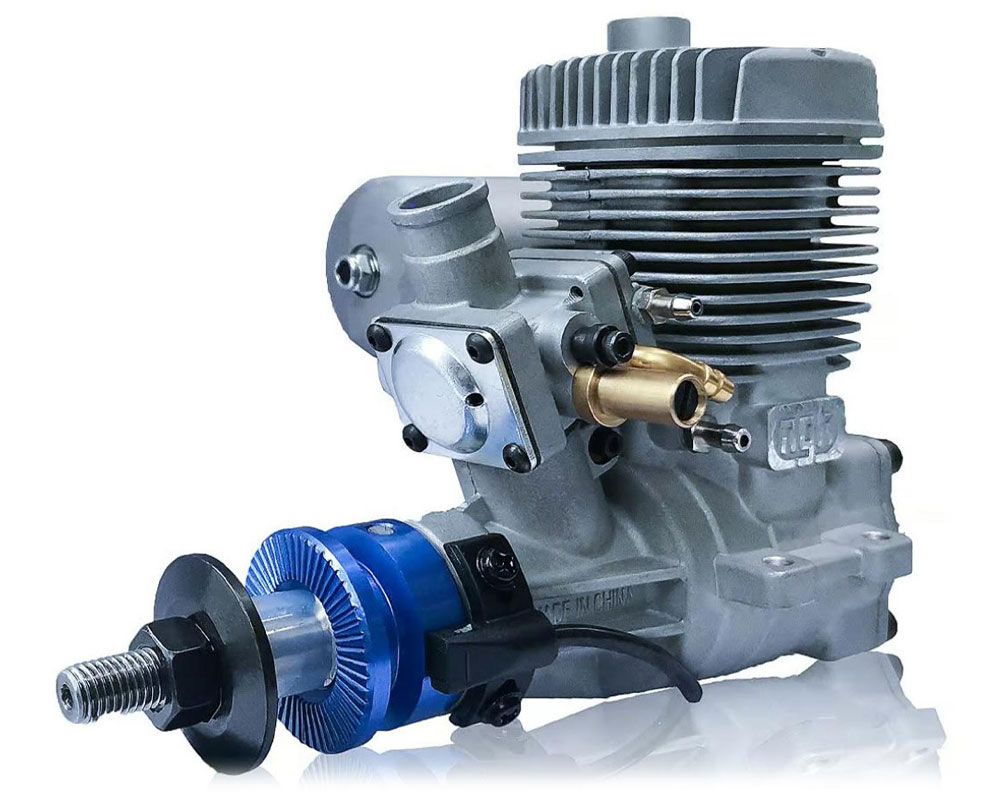
Electric power has made RC flying more accessible than ever, but gas-powered aircraft still hold a strong place in the hobby, especially for pilots moving into larger sport models, scale warbirds, and long-duration flying.
Gas flying is a more hands-on experience. There is fuel to mix, engines to tune, ignition systems to understand, and maintenance habits to develop. For pilots who enjoy the mechanical side of RC aviation, that involvement is part of the appeal.
This guide walks through how gas-powered RC airplanes work, how they compare to electric models, what kind of maintenance they require, and what to consider before making the move into gas power.
What Are Gas-Powered RC Planes
A gas-powered RC plane runs on an internal combustion engine - the same basic idea as a lawnmower or chainsaw. Fuel and air mix inside the engine, ignite, and the combustion drives a piston that spins the propeller. It’s a simple concept that has been powering model aircraft for over half a century.
There are two internal combustion (IC) engine types you'll run into:
- Glow/Nitro engines run on methanol-based fuel containing nitromethane and lubricating oil. Ignition comes from a glow plug, a small element that stays hot enough to fire the mixture once the engine is running.
- Gasoline engines run on regular pump petrol mixed with two-stroke oil. They use a spark plug and ignition module, much closer to how a car engine works.
Engine size is measured in cc (cubic centimeters), which refers to how much volume the piston displaces per stroke. Small sport planes typically run 5-25cc engines. Large-scale warbirds can run 100cc or more. More cc generally means more power, a bigger prop, and a larger airframe.
|
Quick fuel notes worth knowing:
|
Two-Stroke vs Four-Stroke Gas Engines
Most gas RC planes run a two-stroke engine, and for good reason. They're lighter and punch above their weight when it comes to power. Four-stroke engines have their place too, which is mainly on larger-scale builds where sound and realism matter more than outright performance.
Here's how the two compare:
|
|
Two-Stroke |
Four-Stroke |
|
Weight |
Lighter |
Heavier |
|
Power-to-weight |
Higher |
Lower |
|
Sound |
Sharp, crackling |
Low, realistic rumble |
|
Complexity |
Simple, fewer parts |
More moving parts |
|
Maintenance |
Easier |
More involved |
|
Best for |
Sport flying, aerobatics |
warbirds |
|
Oil |
Mixed into fuel |
Separate lubrication |
Gas, Electric, or Nitro — Which One Is Right for You?
Choosing the right power system is one of the biggest decisions you’ll make when selecting an RC airplane. Electric, nitro, and gas each offer a different balance of convenience, sound, maintenance, flight time, and realism, so the best choice depends on the aircraft, your experience level, and the type of flying you want to do.
- Electric is convenient, clean, and easy to operate.. There is no fuel to mix or store, setup at the field is quick, and electric aircraft are available for nearly every skill level. Flight times vary widely by model and flying style, from just a few minutes on high-performance EDF jets to 10 minutes or more on many trainers. Replacement LiPo batteries are also an ongoing cost to consider.
- Nitro or glow-powered, aircraft offer a traditional internal-combustion flying experience in a wide range of smaller and mid-size models. They provide the sound, tuning, and hands-on operation many pilots enjoy, though glow fuel cost and availability can be drawbacks. Flight times vary by aircraft, tank size, and throttle use, but they can be very reasonable when properly set up.
- Gas power is most commonly used in larger RC aircraft, where the added engine weight, fuel system, ignition system, and vibration are better suited to the airframe size. Gasoline is typically far less expensive than glow fuel, and properly set up gas aircraft can offer excellent flight times depending on tank size, engine choice, and throttle use. The tradeoff is that gas models require more setup, tuning, maintenance, and field equipment than electric aircraft.
|
|
Gas |
Electric |
Nitro |
|
Flight time |
8-20+ min |
3-10+ min |
6-15+ min |
|
Fuel/running cost |
Low |
Medium (batteries) |
High |
|
Noise |
High |
Low |
High |
|
Maintenance |
High |
Low |
Medium |
|
Skill Level |
experienced pilots |
Nearly all skill levels |
Trainers, small sport models, classic balsa aircraft |
Pros and Cons of Gas-Powered RC Planes
Pros:
- Much longer flight times than electric
- More power and lighter weight for larger and heavier aircraft
- Lower ongoing fuel cost than nitro
- More realistic sound and feel
- Handles a wider range of flying conditions
Cons:
- Requires more maintenance (spark plugs, fuel lines, carburetor)
- Not suitable for beginners
- noise restrictions at some flying sites
How to Maintain a Gas-Powered RC Plane
Gas planes reward pilots who stay on top of maintenance. None of it is complicated, but skipping it has a way of turning a small issue into a much bigger one at the worst possible time.
Engine Break-In
A new engine needs time before it's ready for full throttle flying. Running it rich and easy for the first several sessions lets the internal parts seat properly. Engine break in procedures can vary by engine manufacturer. In general, they will follow a similar path as below:
- Run the first few tanks at a rich needle setting and varied throttle
- Avoid sustained full throttle until at least 3 to 5 tanks have gone through
- Re-tune the needles after break-in, as the engine will run noticeably richer once it's settled
Spark Plugs
A fouled or worn spark plug is one of the most common reasons a gas engine won't start or runs rough.
- Inspect the plug after every few flying sessions
- Look for carbon buildup, erosion on the electrode, or a cracked ceramic
- Ensure the electrode gap is properly set
- Keep a spare plug in your field box at all times
Fuel Lines
Fuel lines degrade over time and a crack or loose fitting can cause the motor to quit in flight (often called a dead stick) or a no-start situation.
- Check lines before every flying session for cracks, stiffness, or discoloration
- Replace them at least once a season (regardless of how they look)
- Use a fuel line rated for gasoline, not standard silicone tubing
Carburetor Tuning
The carburetor has two needle valves — one for high speed and one for low speed idle. Getting both right gives you clean throttle response and a reliable idle.
- Set the high needle first at full throttle, tuning for peak RPM
- Then set the low needle at idle, adjusting until throttle transitions are crisp with no bog
- Tuning may be required any time you change fuel, change flying sites or notice a change in engine behavior
Airframe Inspection
The vibration from a gas engine is real, and it works on screws, hinges, and control linkages over time. Additionally, unburnt oil can also work its way into hinges, joints and other similar areas.
- Be sure to use thread lock on all metal to metal fasteners
- Check all screws and bolts after every flight
- Inspect control surface hinges and pushrods for any looseness or play
Storage
Leaving fuel in the carburetor for weeks is a way to start your next session with a gummed-up carburetor. Additionally, oil residue on the airframe can reduce covering life.
- Run the engine until it dies from fuel starvation to clear the carb and lines
- Store the plane somewhere dry and away from direct sunlight to protect the airframe. After-run oil in the cylinder keeps the internals from sitting dry.
- Clean the airframe of any unburnt oil residue. Be sure to check the underside of the airframe since the exhaust usually exits under the airframe.
Where to Fly Gas-Powered RC Planes?
Gas planes are loud and need real space, so a local park is not the right place for them. The noise alone rules that out at most locations, and the size of the models means you need real space to fly safely. The good news is that dedicated RC flying fields exist specifically for this, and finding one near you is easier than it used to be.
For pilots in the US, dedicated club fields chartered by the Academy of Model Aeronautics (AMA) are usually the best place to fly gas-powered RC aircraft. These sites typically offer more space, established safety procedures, and clear rules for internal-combustion models. Club policies can vary, so pilots should confirm local noise limits, flying hours, and aircraft restrictions before flying. The AMA Club Finder at modelaircraft.org is a helpful starting point for locating a nearby field.
Across Europe, flying rules, noise limits, and club requirements vary by country, region, and flying site. Before flying a gas-powered RC aircraft, check with your local model flying association or RC club to confirm where internal-combustion models are permitted and whether any noise restrictions or operating hours apply.
In the UK, the British Model Flying Association (BMFA) is a helpful resource for finding clubs, understanding local flying guidance, and connecting with experienced pilots. Many UK club sites allow internal-combustion aircraft, but rules vary by location, so it is always best to check with the club before flying.
For pilots new to gas or nitro aircraft, a club environment is one of the best places to learn proper engine setup, tuning, field safety, and operating habits from experienced modelers.
Conclusion
Gas-powered RC flying is not the simplest entry point into the hobby, but for experienced pilots who enjoy larger aircraft, longer flight times, realistic engine sound, and hands-on setup, it can be a very rewarding path.
The key is choosing the right aircraft, understanding the engine and fuel system, and learning proper setup and maintenance habits before heading to the field. A gas-compatible balsa ARF can be a good starting point for pilots who already have solid flying experience and want to explore internal-combustion power.
Motion RC carries a wide selection of RC aircraft across different sizes, power options, and skill levels. Browse the full RC airplane collection to find a model that fits your flying style, field requirements, and experience level.
FAQ Section
Q: Are gas-powered RC planes suitable for beginners?
A: No. Gas planes require experience in RC flying, engine tuning, and maintenance. Beginners should start with electric RTF trainers first.
Q: What fuel do gas-powered RC planes use?
A: Most use a mixture of regular pump petrol and two-stroke oil, typically at a 30:1 to 50:1 ratio. Always follow your engine manufacturer's recommendation.
Q: How long can a gas-powered RC plane fly on one tank?
A: Depending on engine size and throttle use, most gas planes can fly for 8 to 20 minutes on a single tank, which is significantly longer than electric planes.
Q: What is the difference between gas and nitro RC planes?
A: Gas-powered RC planes use gasoline/petrol mixed with two-stroke oil and typically use a spark ignition system. Nitro, or glow-powered, RC planes use methanol-based fuel containing nitromethane and oil, with ignition provided by a glow plug. Gasoline/petrol is generally less expensive than glow fuel, especially for larger engines, while nitro engines are commonly used in smaller and mid-size aircraft where pilots want the sound, tuning, and feel of internal-combustion power.
Q: How often should I service a gas RC plane engine?
A: Check the spark plug and fuel lines after every 5–10 flights. A full service, including carburetor check and fuel system clean should be done every season or after 30–40 flights.
Q: Can I fly a gas-powered RC plane at any flying site?
A: Not always. Many flying sites have noise restrictions that prohibit gas and nitro engines. Always check with your local club or BMFA-registered or AMA-registered site before flying.


Trending Items


RotorScale MD-500D Magnum PI Super Scale 470 Size GPS Stabilized Helicopter - RTF

SKU: RSM-470-R-MD-MG


RotorScale UH-1 Huey “114th AHC” 150 Size Gyro Stabilized Helicopter - RTF
SKU: RSH1024-001


RotorScale UH-1Y Venom 220 Size GPS Stabilized Helicopter – RTF

SKU: RSH1023-001


Freewing A-10 Thunderbolt II V3 Twin 64mm High Performance EDF Jet - PNP
SKU: FJ11711P


New Arrivals


Team Corally Punisher XD Red Small Scale 4WD Monster Truck - RTR

SKU: COR00231-R


Team Corally Punisher XD Orange Small Scale 4WD Monster Truck - RTR
SKU: COR00231-O


Team Corally Punisher XD Green Small Scale 4WD Monster Truck - RTR
SKU: COR00231-G


Team Corally Punisher XD Blue Small Scale 4WD Monster Truck - RTR
SKU: COR00231-B


Team Corally Furago XD Blue Small Scale 4WD Monster Truck - RTR
SKU: COR00230-B


Team Corally Furago XD Green Small Scale 4WD Monster Truck - RTR
SKU: COR00230-G